

UTI symptoms in men: main causes & remedies

Contents
 Facebook
  X
X  Copy Link
Overview
UTIs are less frequent in men than in women. Because a male UTI can often indicate an underlying health issue (such as prostate enlargement or kidney stones), all male UTIs require thorough medical assessment and follow-up. In Australian men, infections typically impact the bladder, urethra, or even the prostate. Recognising the symptoms and knowing when to seek help can prevent complications.
Note: This content is for general informational purposes only and does not constitute medical advice, diagnosis, or treatment. Male UTIs can be complex and may require physical examination (e.g., prostate check) or urine culture testing. Telehealth GPs will determine if you require an in-person visit. Prescriptions are issued at the strict clinical discretion of the doctor. We recommend sharing your consult summaries with your regular GP and bulk billing is available for eligible patients during Medicare-defined periods; otherwise, private fees apply. Ensure your privacy is protected. All consultations are strictly confidential and conducted via secure, encrypted platforms to safeguard your personal health data.
What does a UTI feel like for Aussie men
A UTI in men can lead to uncomfortable and often troubling symptoms. You might experience:- An urgent or frequent desire to urinate, even if little comes out
- A burning or stinging feeling while urinating
- Discomfort or pressure in the lower abdomen, back, or groin
- Cloudy urine that has a strong odour or contains blood
- Feeling fatigued, low-energy, or generally unwell
When to seek emergency care
Call 000 or go to the Emergency Department immediately if you have:
- High fever (>38.5°C) and chills/shaking.
- Severe flank (side/back) pain.
- Vomiting or inability to keep fluids down.
- Inability to pass urine at all (Acute Urinary Retention).
UTI risk factors
The majority of UTIs are the result of bacteria, predominantly E. coli. Certain factors can heighten the risk for men:- An enlarged prostate hampers urine flow, allowing bacteria more time to multiply
- Anatomical variations in the urinary tract – some men may be born with differences that make them more susceptible to infections.
- Kidney stones can obstruct or irritate the urinary pathway
- Unprotected sexual intercourse can lead to infections that may initiate UTIs
- Recent procedures or catheterisation elevate the likelihood of bacteria entering the urinary system
Types of UTI in men
Men can experience various types of UTIs:- Urethritis – infection of the urethra, leading to burning sensations during urination
- Cystitis – infection of the bladder that causes urgency and lower abdominal pain
- Prostatitis – infection affecting the prostate, associated with groin or lower back pain
- Pyelonephritis – a kidney infection, often coupled with fever, back pain, and chills (requires immediate medical attention)
Home remedies & prevention
Although home remedies cannot cure a UTI, they may alleviate symptoms or help prevent one from occurring.- Stay hydrated – drinking plenty of water helps flush out bacteria
- Cranberry products – may help prevent bacteria from adhering to the urinary tract (not a solution)
- Avoid irritants – minimise alcohol, caffeine, and spicy foods
- Warm compress – can soothe discomfort in the abdomen or back
- Maintain good hygiene – shower daily and urinate following sexual activity
- Do not hold urine – make a habit of emptying your bladder regularly
Note: Home remedies are for supportive symptom relief only. They do not treat the underlying bacterial infection. Antibiotics are essential for men to prevent the infection from spreading to the prostate or kidneys.
When home remedies aren’t enough
If symptoms do not improve, consulting a doctor is advisable. A doctor can verify if you are experiencing a UTI or another condition. Consult a GP or a telehealth doctor if you experience:- Burning or pain during urination.
- Persistent or worsening symptoms.
- Presence of blood in urine, fever, or discomfort in the back.
- Chills, nausea, or vomiting may indicate a kidney infection.
What can be mistaken for a UTI in men?
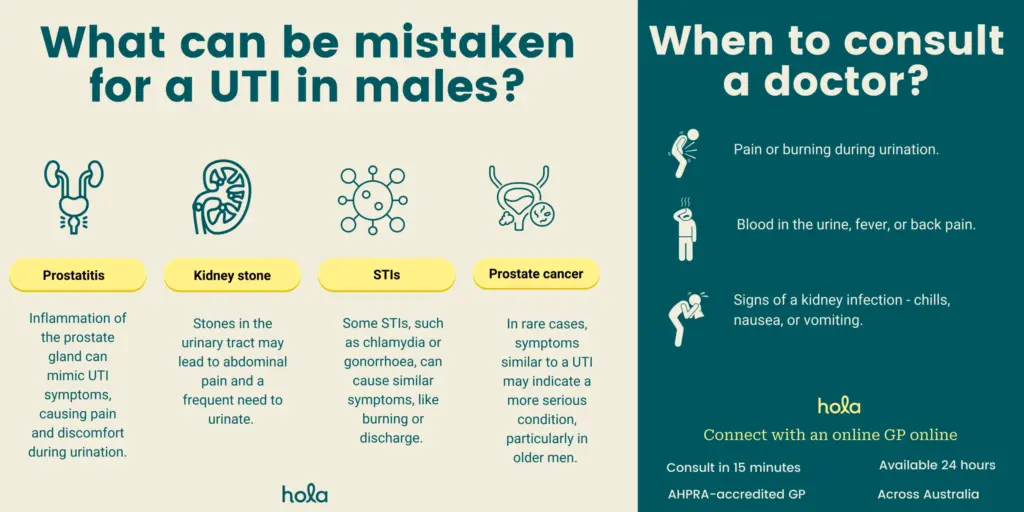 Not all instances of painful urination are due to a UTI. Other conditions may present similar symptoms, such as:
- Prostatitis – inflammation of the prostate that leads to discomfort and burning
- Kidney stones – characterised by abdominal or flank pain along with frequent urination
- STIs – infections like chlamydia or gonorrhea can result in burning sensations or discharge
- Bladder or prostate cancer – though less common, it is a possibility in older men
When to see online doctor
You can reduce waiting time with Hola Health. Our Australian GPs are available online and can assist with:- Evaluating your symptoms and determining if it’s a UTI.
- Providing prescriptions for antibiotics if necessary.
- Making referrals for tests or specialist consultations.
- Issuing medical certificates for work or study.
Conclusion
Urinary tract infections (UTIs) in men may be less frequent, but they should not be overlooked when they happen. Although some home remedies might help alleviate discomfort, antibiotics are typically required to resolve the infection. With Hola Health’s telehealth service, men in Australia can easily consult a general practitioner, receive appropriate treatment, and avoid the inconvenience of waiting rooms. If a UTI is affecting your comfort or daily activities, schedule an online telehealth consultation today and get the necessary care from your own home.FAQ
Can men contract UTIs through sexual activity?
Yes, engaging in sexual intercourse can allow bacteria to enter the urinary tract, raising the risk.Are UTIs in men considered more serious than those in women?
Potentially. Since UTIs are less frequent in men, they are more often associated with an underlying condition, such as prostate enlargement or kidney stones.Do all UTIs necessitate antibiotics?
Yes. Unlike some mild UTIs in women, men's UTIs generally require antibiotic treatment.How long does it typically take for a UTI to resolve in men?
With appropriate antibiotics, most infections clear up in 7 to 10 days. Without treatment, they can persist and result in complications.See a Aussie GP online, available 24/7
Download the app today.


Related Articles

Disclaimer
This blog is for general informational purposes only and does not indicate that Hola Health provides all treatments or preventive measures mentioned. It is not intended to be a substitute for professional medical advice. Always seek the guidance of your doctor or other qualified health professional with any questions you may have regarding your health or a medical condition. For emergencies please immediately contact 000. Any medical topics discussed are intended to educate, not to imply availability through Hola Health.