

Contents
Best 7 simple actions to boost low mood: Therapist-approved

 ChatGpt
  Google AI Mode
  Perplexity
  Claude
 This blog is for educational purposes only and does not replace professional medical advice or diagnosis. If you have health concerns, consult an AHPRA-registered telehealth doctor or request a medical certificate online if clinically appropriate. Please note: Hola Health does not currently offer Mental Health Care Plans.
Overview
Simple actions like moving your body, embracing gratitude, connecting with others, soaking in sunlight, and listening to positive music can quickly boost your mood. These therapist-approved techniques guide you to refocus, reduce stress, and bring positivity back into your life.
We all have those days when the clouds seem a little darker, and nothing feels right. Whether you’re feeling tired, disconnected, or just off, the good news is that you don’t need a miracle to feel better. There are quick, simple steps, approved by therapists, that can instantly boost your mood and help you feel more like yourself. So, let’s shake off that negativity and dive into easy ways to brighten your day!
7 simple actions to boost your low mood
Experiencing sadness can be difficult, but small, purposeful steps can help change your perspective. These straightforward strategies, suggested by therapists, can enhance your mood and help restore emotional stability.
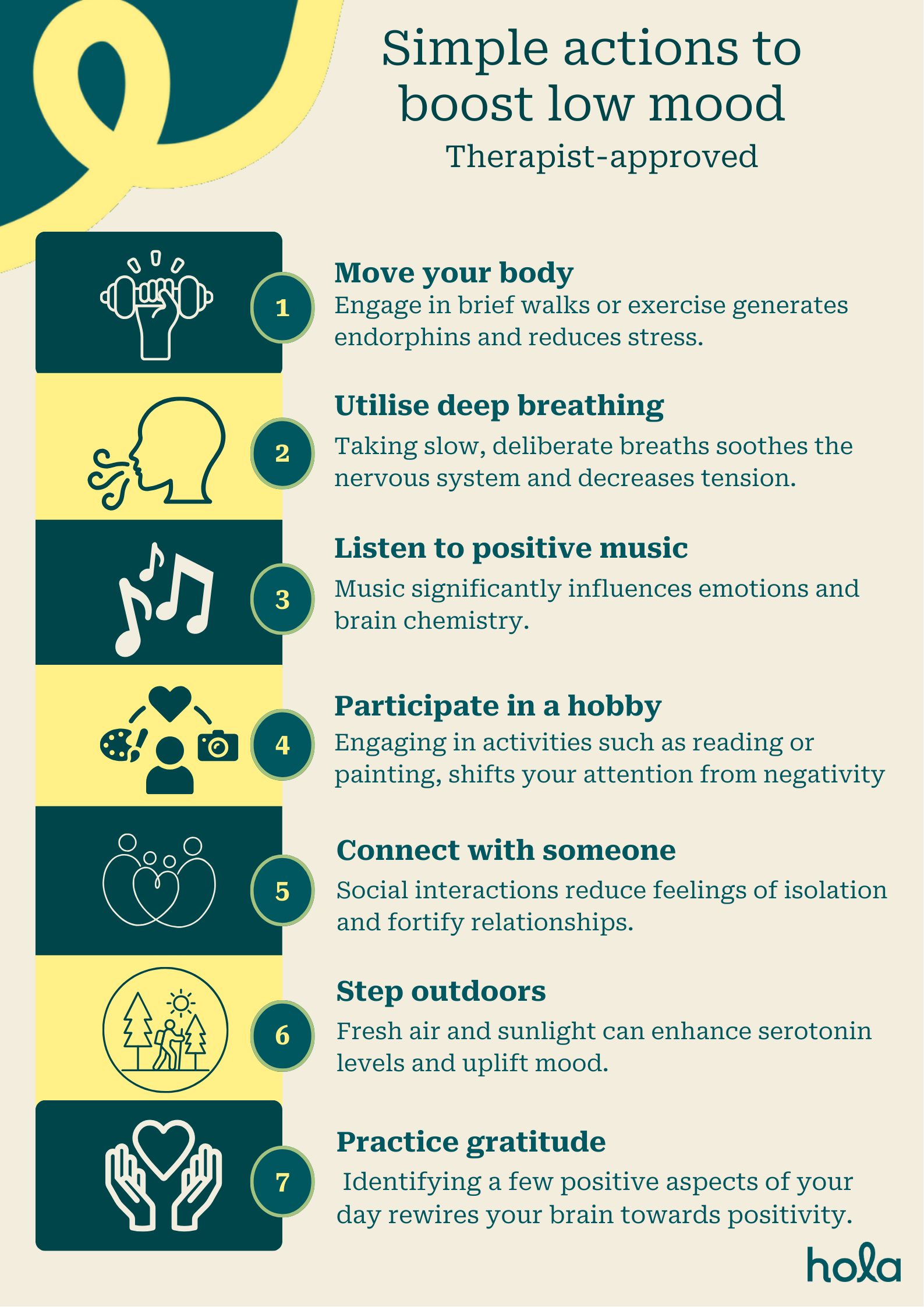
- Move your body: Engaging in physical activity, even just a brief walk, generates endorphins and alleviates stress. Consistent movement supports overall health and can improve energy levels.
- Utilise deep breathing: Taking slow, deliberate breaths soothes the nervous system and decreases tension. This simple technique can quickly relieve anxiety and encourage relaxation.
- Listen to positive music: Music significantly influences emotions and brain chemistry. Select songs that elevate, energise, or provide solace.
- Participate in a hobby: Engaging in activities you love, such as reading or painting, shifts your attention from negativity. Creative and fun pursuits stimulate the brain and bring happiness.
- Connect with someone: Speaking to a friend or family member offers emotional support and a fresh perspective. Social interactions reduce feelings of isolation and fortify relationships.
- Step outdoors: Fresh air and sunlight can enhance serotonin levels and uplift mood. A change of scenery may also disrupt negative thought patterns. Even brief exposure to nature has been linked to improved mental well-being.
- Practice gratitude: Identifying a few positive aspects of your day rewires your brain towards positivity. Gratitude builds resilience and redirects focus from negativity.
Raising your spirits doesn’t necessitate major changes, small actions can truly impact. Experiment with various strategies to discover what suits you best.
Signs of low mood
Everyone has moments of feeling down, but ongoing low mood can influence daily life. Recognising signs early can assist in emotional management and seeking support when necessary.
- Continual sadness: Experiencing sadness, emptiness, or tearfulness for extended periods. These emotions may occur without an obvious cause.
- Disinterest: Hobbies, social engagements, or daily activities seem unappealing or exhausting. Even previously enjoyable activities can start to feel burdensome.
- Low energy: Persistent tiredness or lethargy, even after rest. Simple tasks may appear daunting or challenging to finish.
- Sleep pattern changes: Trouble falling asleep, staying asleep, or oversleeping. Sleep disturbances can worsen mood and energy issues.
- Concentration difficulties: Finding it hard to focus, make choices, or recall information. Work, studies, or conversations may become more difficult.
- Heightened irritability: Feeling more annoyed, impatient, or easily angered. Minor issues that once didn’t trouble you may now feel overwhelming.
If these signs continue or worsen, seeking assistance from a friend, loved one, or mental health expert can be beneficial. Acknowledging and addressing low mood early can make a significant impact.
Possible causes of low mood or depression
Low mood or depression can arise from several factors, including biological, psychological, and environmental elements. Identifying the underlying causes can aid in effectively managing and addressing the issue.
- Chronic stress: Ongoing stress from work, relationships, or obligations can drain mental and emotional energy, resulting in low mood.
- Trauma or past experiences: Adverse childhood experiences, loss, or traumatic events may contribute to negative thought patterns and emotional pain.
- Hormonal changes: Variations in hormones, such as during pregnancy, postpartum, menstrual cycles or menopause, can influence mood and emotions.
- Genetic factors: A family history of depression or mental health issues may increase the risk of experiencing a low mood.
Grasping the potential causes of low mood is the initial step toward discovering solutions. Seeking professional advice and making lifestyle changes can enhance emotional well-being.
Support if you have low mood or depression
If you’re feeling low or depressed, obtaining support is crucial. Discuss your feelings with someone you trust, like a friend, relative, or partner. Reach out to a online doctor or therapist for professional advice and treatment options. Consider joining a support group to connect with others facing similar struggles.
Focus on self-care through adequate rest, nutritious eating, and physical activity. Practicing relaxation techniques, such as deep breathing or meditation, can help manage negative thoughts. If symptoms persist, think about helplines or mental health services for immediate assistance. Remember, you’re not alone—requesting help is a sign of strength. While mental health support are available in Australia, not all are 100% bulk billed.
Coverage varies depending on the provider and individual circumstances, you can still research if there mental health support online that are 100% bulk-billed* in Australia. So, the next time you’re feeling low, remember that you don’t need something extraordinary to boost your mood. A little movement, some gratitude, a conversation with a friend, some sunshine, or your go-to playlist can do wonders. These simple therapist-approved strategies are like pocket-sized mood enhancers, ready to help whenever you need them. Try them and see your mood lift right away!
See an AHPRA-registered doctor online, anytime
24/7 across Australia
Authors

Editorial staff
Medically reviewed by

Amira Shah
Master’s in Counselling Psychology, Psychotherapist & Counsellor
8+ Years of Experience
Amira Shah is a trauma-informed psychotherapist with over a decade of experience in supporting women through complex mental health challenges. She holds a Master’s in Counselling Psychology and has worked extensively at a women’s centre, offering therapy to survivors of physical abuse, sexual assault, PTSD, and human trafficking. Amy owns her practice, Empathetic Counselling & Psychotherapy (ECP), and is committed to continuing her support for women.
Disclaimer
This blog is for general informational purposes only and does not indicate that Hola Health provides all treatments or preventive measures mentioned. It is not intended to be a substitute for professional medical advice. Always seek the guidance of your doctor or other qualified health professional with any questions you may have regarding your health or a medical condition. For emergencies please immediately contact 000. Any medical topics discussed are intended to educate, not to imply availability through Hola Health.
Note: At Hola Health, we're committed to offering trustworthy, accurate and up-to-date health information. Our Editorial Process entails thorough research, fact- checking, and medical review by doctors in diverse health fields, including medical practitioners, doctors, and psychotherapists based in Australia. We take guidance from qualified Australian doctors. We prioritise primary sources and avoid tertiary references wherever possible.
See a Aussie GP online, available 24/7
Download the app today.