Health Checks For Women Of All Ages In Australia - A Guide

Written by Dr Nelson Lau, MBBS FRACGP, GP & Digital Health Specialist. Blog updated on 15 December, 2025. Originally published on 06 May, 2024.
Contents
Overview
Medical screenings help doctors identify health issues at their most treatable stages. Australian women who attend their recommended health checks reduce their risk of developing serious medical conditions.
This guide outlines the essential health screenings doctors recommend at different life stages.
Why Women Need Regular Health Checks
- Early detection leads to better treatment outcomes. Australian screening programs have helped reduce cervical cancer incidence by nearly half nationwide.
- Prevention is more effective than treating established disease. Routine tests help identify potential health issues before they become serious.
- Health screening needs change throughout life. The tests recommended in your 20s differ from those advised in your 50s and beyond.
Health Checks by Age Group
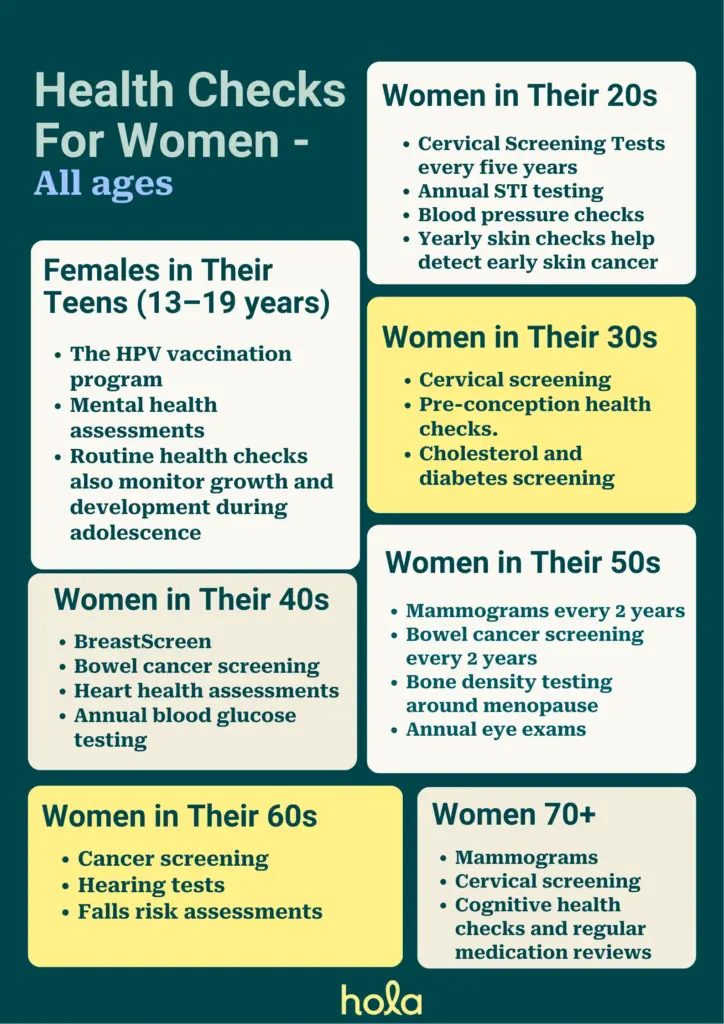
Females in Their Teens (13–19 years)
The HPV vaccination program is offered free to students in Year 7. Mental health assessments are important for young women experiencing anxiety, mood changes, or stress. Routine health checks also monitor growth and development during adolescence.
Women in Their 20s
Women aged 25 and over are eligible for free Cervical Screening Tests every five years through the National Cervical Screening Program. Sexually active individuals should have annual STI testing. Blood pressure checks are recommended every two years, and yearly skin checks help detect early skin cancer.
Women in Their 30s
Cervical screening continues every five years in this age group. Women planning pregnancy may benefit from pre-conception health checks. Cholesterol and diabetes screening may be recommended for those with risk factors.
Women in Their 40s
BreastScreen Australia offers free mammograms from age 40, with screening every two years. Bowel cancer screening kits are available from age 45. Heart health assessments and annual blood glucose testing typically begin around this age.
Women in Their 50s
Women aged 50 to 74 should continue mammograms every two years and complete bowel cancer screening every two years. Doctors may recommend bone density testing around menopause. Annual eye exams are also advised.
Women in Their 60s
Cancer screening programs continue until age 74. Hearing tests become increasingly important, and free flu vaccinations are available from age 65. Falls risk assessments help maintain independence and safety.
Women 70+
Mammograms remain available, though routine invitations usually stop after age 74. Cervical screening may continue for some women with previous abnormal results. Cognitive health checks and regular medication reviews are also recommended.
Experiencing these symptoms? Speak with a doctor within 15 minutes.
Mental Health Checks for Women
Women should treat their mental health with the same importance as their physical health. Women experience higher rates of anxiety and depression than men. A mental health assessment should form part of any GP visit.
Medicare provides financial support through Mental Health Care Plans, allowing eligible patients to access subsidised psychology sessions.
Reproductive, Sexual & Menopause Health Checks
All sexually active women should undergo regular sexual health screening. Contraception needs should be reviewed periodically, as requirements can change over time.
Doctors can also provide menopause treatment to help manage hot flushes, mood changes, and sleep issues. Pelvic floor health assessments are important after childbirth and as women age.
Reference Table
| Test | Age | Frequency |
| Cervical Screening | 25–74 | Every 5 years |
| Mammogram | 40+ (50–74 invited) | Every 2 years |
| Bowel Screening | 45–74 | Every 2 years |
| Blood Pressure | All ages | Every 2 years |
| Cholesterol | From 45 | Every 5 years |
| Blood Glucose | From 45 | Every 3 years |
| Eye Test | All ages | Every 2–3 years |
| Skin Check | All ages | Annually |
How Hola Health Can Help
Health checks don’t always require an in-person visit. Hola Health’s online doctor service allows you to discuss symptoms, obtain test referrals, review results, and plan ongoing care from home.
Telehealth supports preventive care, although services such as mammograms and cervical screening still require in-clinic visits.
FAQs
How often should women see a doctor for general health checks?
Women without ongoing health conditions should see their GP at least once a year. Seniors and people with chronic conditions may require more frequent visits.
Under the National Cervical Screening Program, women aged 25 to 74 should have cervical screening every five years.
Which medical tests are free in Australia?
Free services include cervical screening for women aged 25–74, mammograms through BreastScreen Australia for women aged 40 and over, and bowel cancer screening kits for people aged 45–74.
Many doctor-referred pathology tests are bulk billed through Medicare.
Do women need routine hormone testing?
Routine hormone testing is not recommended for most women. A GP may request hormone tests if specific symptoms suggest a hormonal imbalance.
Mammograms before age 40 are usually only recommended for women with a strong family history or known genetic risk. Always discuss individual concerns with your GP.
Telehealth consultations allow women to discuss symptoms, organise blood tests, and review results remotely, although physical examinations still require in-person visits.
What symptoms require urgent medical attention?
Seek medical care if you experience unexplained weight loss, persistent fatigue, unusual bleeding, breast lumps, blood in urine or stool, ongoing abdominal pain, or changes in moles.
Feeling sick and unsure why? Speak with a GP online in 15 minutes.
What we treat
- Cough
- Nausea & vomiting
- Fever
- Hayfever
- Fatigue
- Sore throat
- Acne
- Hair loss
- Gout
- Eczema
- Rosacea
- Sunburn
- UTI
- Erectile dysfunction
- Contraception
- Morning sickness
- Morning after pill
- Prostate health
- Anxiety
- Depression
- Stress
- Grief & loss
- Antidepressants
- Premature ejaculation
- Asthma
- Blood pressure
- Blood thinners
- Diabetes
- Cholesterol
- Migraines & headaches
- Allergies
- Body ache
- Heartburn & reflux
- Sleep disorder
- Pain relief
- Gastro
Related Articles
Disclaimer
This blog is for general informational purposes only and does not indicate that Hola Health provides all treatments or preventive measures mentioned. It is not intended to be a substitute for professional medical advice. Always seek the guidance of your doctor or other qualified health professional with any questions you may have regarding your health or a medical condition. For emergencies please immediately contact 000. Any medical topics discussed are intended to educate, not to imply availability through Hola Health.
Facebook
X
Copy Link